Finding the right job can feel overwhelming, especially when you want a position that matches your skills, experience, and salary expectations. If you are searching for Salem OR jobs, Salem, Oregon, offers several employment pathways to explore, including government, healthcare, retail, administration, and other professional fields. Whether you are a recent graduate, an experienced worker, or someone looking for part-time employment, knowing where to search can make your job hunt more focused and productive.
One useful starting point is the official City of Salem careers page, which provides information about available positions, application procedures, and employee benefits. You can also explore WorkSource Oregon for job-search assistance, career planning, and training resources.
In this guide, you will learn how to find Salem OR jobs, explore different career options, prepare a strong application, and identify reliable employment resources. You will also discover practical tips for improving your resume, preparing for interviews, and avoiding misleading job advertisements. Although hiring availability changes frequently, using trusted sources and matching your qualifications to each position can help you take a confident step toward your next career opportunity.
Salem vs Jobs: What’s the Difference?
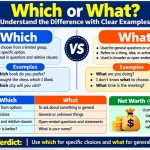
The primary difference between Salem and jobs is their meaning, grammatical role, and purpose in a sentence. Salem generally identifies a particular place or person, while jobs describes employment positions or tasks.
| Feature | Salem | Jobs |
|---|---|---|
| Part of speech | Proper noun | Plural noun |
| Basic meaning | Name of a place or person | Employment positions or tasks |
| Capitalization | Usually begins with a capital letter | Usually lowercase |
| Singular form | Salem is a name, not a plural noun | Job |
| Common context | Geography, history, personal names | Careers, recruitment, responsibilities |
| Example | Salem is a historic city in Massachusetts. | She applied for three jobs. |
| Common search intent | Finding information about a place or person | Finding employment opportunities |
Mini recap
Salem identifies something by name, whereas jobs refers to positions or tasks.
Consequently, neither word is a direct substitute for the other.
However, both can appear in a single phrase, such as jobs in Salem.
Therefore, the surrounding words determine the intended meaning.
Is Salem vs Jobs a Grammar, Vocabulary, or Usage Issue?
The distinction is primarily a vocabulary and usage issue. Nevertheless, grammar also matters because each word performs a different function within a sentence.
Are Salem and jobs interchangeable?
No. Salem and jobs are not interchangeable because they communicate different ideas.
For example, consider these sentences:
- Salem is known for its historical significance.
- My brother is looking for jobs.
The first sentence identifies a place, while the second describes an employment search. Replacing Salem with jobs would change the entire meaning of the first sentence.
Similarly, replacing jobs with Salem would make the second sentence incorrect or confusing.
Formal versus informal usage
In formal writing, proper nouns such as Salem should retain their correct capitalization. Meanwhile, jobs remains lowercase unless it begins a sentence or appears in a title where capitalization rules require otherwise.
In casual conversation, people sometimes shorten search phrases. For instance, someone might type “Salem jobs” into a search box rather than writing “jobs available in Salem.”
Although the shorter phrase is understandable in a search context, a complete sentence usually provides greater clarity in professional communication.
Academic versus casual usage
In academic writing, Salem may refer to a specific historical location, a geographic area, or a person identified by that name. Therefore, writers should provide enough context to identify the intended subject.
By contrast, jobs may appear in discussions of economics, employment, career development, or social policy.
For example, a research paper might discuss employment growth in Salem. In that sentence, Salem identifies the location, while employment describes the subject being studied.
Usage recap: Salem is a name, whereas jobs is a plural noun. Although both can appear together naturally, their meanings remain distinct.
How to Use Salem Correctly
Salem is a proper noun, so it usually identifies a specific place, person, or named entity. However, its exact reference depends on the surrounding context.
For example, Salem can refer to Salem, Massachusetts or Salem, Oregon. It can also refer to other places or people with the same name.
Workplace example
Suppose a company operates offices in several cities. A manager might write:
“Our Salem office will interview applicants next Tuesday.”
Here, Salem identifies the office location. Meanwhile, the sentence communicates a workplace activity without suggesting that Salem itself means employment.
A clearer version may be necessary if the audience doesn’t know which Salem is intended.
Academic example
Consider the following sentence:
“Salem played an important role in the history of colonial Massachusetts.”
In this example, Salem refers to a historical location. Because the name is capitalized, readers can recognize it as a proper noun.
However, an academic writer should provide additional details whenever several places share that name.
Technology example
When using a map application or search engine, someone might enter “Salem population” or “Salem weather.” In both cases, the name identifies the location being researched.
Similarly, a database might contain a field labeled “City” with Salem as one of its values. Therefore, the name serves as identifying information rather than a description of employment.
Usage recap
Use Salem when referring to the intended place, person, or named subject. Moreover, include a state, country, or other identifying detail whenever the context could be ambiguous.
How to Use Jobs Correctly
Jobs is the plural form of the noun job. It usually refers to paid employment positions, although it can also describe tasks, duties, or pieces of work that need to be completed.
For instance, “There are several jobs available” describes employment opportunities. By contrast, “These jobs require careful planning” may refer to tasks rather than paid positions, depending on the context.
Workplace example
A recruiter might write:
“We currently have five jobs available in our customer service department.”
Here, jobs refers to employment positions. Therefore, the sentence communicates the availability of work opportunities.
However, if the writer means assignments rather than vacancies, a phrase such as “five tasks” may be more precise.
Academic example
Consider this sentence:
“The study examines how technology affects jobs in manufacturing.”
In this example, jobs refers to employment positions within a particular industry. The sentence is appropriate for an academic discussion of labor markets, workplace changes, or economic development.
Likewise, a researcher might examine how new businesses create jobs in a particular city.
Technology example
A job search platform may organize vacancies by occupation, salary, experience level, and location. As a result, users can filter listings to find suitable employment.
For instance, searching for “jobs in Salem, Oregon” combines the two terms correctly. Jobs describes the opportunities, while Salem, Oregon, specifies the desired location.
Usage recap
Use jobs when referring to multiple employment positions or tasks. Additionally, specify the occupation, industry, or location when doing so makes the intended meaning clearer.
When You Should NOT Use Salem or Jobs
Although both words are common, using either one without considering the intended meaning can confuse readers. Therefore, review these common situations before choosing between them.
1. When describing employment without naming a location: Don’t use Salem alone if you mean several available positions. Instead, write “There are several jobs available.”
2. When identifying a city: Don’t use jobs as a substitute for Salem. For example, “Jobs is located in Massachusetts” doesn’t communicate the intended place name.
3. When writing a formal application: Avoid vague phrases such as “I want Salem.” Instead, specify the location and explain that you’re seeking employment there.
4. When entering a search query: Don’t assume that “Salem” will automatically display vacancies. Add “jobs” or a specific occupation to make the search more relevant.
5. When writing an academic paper: Don’t use Salem without explaining which place or historical subject you mean if the reference is unclear.
6. When discussing one employment position: Use job rather than jobs when the noun is singular. For example, “She accepted a job” is correct, while “She accepted jobs” means she accepted multiple positions.
7. When describing an assigned task: Consider whether job, task, duty, or responsibility communicates the intended meaning more precisely. For instance, “My job is to check the figures” can describe a responsibility rather than a vacancy.
8. When capitalizing ordinary nouns: Don’t capitalize jobs unnecessarily in the middle of a sentence. Conversely, capitalize Salem when using it as a proper name.
Common Mistakes and Decision Rules
The following examples demonstrate how context determines the correct word.
| Correct sentence | Incorrect sentence | Explanation |
|---|---|---|
| I am looking for jobs in Salem. | I am looking for Salem in jobs. | The correct sentence identifies employment opportunities in a location. |
| Salem is a city in Massachusetts. | Jobs is a city in Massachusetts. | Jobs doesn’t identify the intended city. |
| She applied for three jobs. | She applied for three Salem. | Jobs is the correct plural noun for employment positions. |
| I visited Salem last summer. | I visited jobs last summer. | Salem identifies the destination. |
| Several jobs are available in Salem. | Several Salem are available in jobs. | The original sentence clearly distinguishes vacancies from location. |
| He accepted a job in Salem. | He accepted jobs in Salem. | The second sentence implies multiple positions rather than one. |
| The company created 50 jobs in Salem. | The company created 50 Salem in jobs. | Jobs describes the positions created, while Salem identifies the location. |
Decision rule box
If you mean a place or named person, use Salem.
If you mean multiple employment positions or tasks, use jobs.
If you mean employment opportunities in a location, use both: jobs in Salem.
Finally, use job instead of jobs when referring to one position or task.
These rules are simple, but they prevent common writing errors. More importantly, they help readers understand whether a sentence describes a location, a vacancy, or a particular responsibility.
Salem and Jobs in Modern Technology and Automated Tools
Modern digital platforms rely on precise words to understand what users want. Consequently, the distinction between a place name and an employment term can affect search results, database filtering, and information retrieval.
For example, a recruitment website may interpret “Salem jobs” as a request for vacancies in a location named Salem. However, the results may be less relevant if the user doesn’t specify a state or country.
Similarly, a map application may prioritize geographic information when someone enters Salem alone. By contrast, a career website may display employment listings when the search includes jobs.
Automated writing tools can also help users identify grammatical problems, although they may not always understand the intended reference. Therefore, writers should review suggested corrections instead of accepting every recommendation automatically.
For best results, provide specific context, use accurate capitalization, and choose words that match the purpose of the sentence.
Etymology: Where Do Salem and Jobs Come From?
Understanding the origins of words can help explain why their meanings differ.
Origin of Salem
Salem is a name with historical and linguistic associations. One well known explanation connects the name with the Hebrew word shalom, meaning peace. The name Salem also appears in religious and historical contexts, while several modern communities use it as a place name.
However, the precise origin of a particular town’s name can vary. Therefore, writers should consult the relevant local history when explaining how a specific community received its name.
Origin of jobs
The word job has a less certain history. English usage developed over time, with the word eventually becoming associated with a task, piece of work, or employment position. Its plural form, jobs, simply refers to more than one job.
Today, the word appears throughout professional communication, recruitment, economics, and everyday conversation.
Expert style quotation
“Clear writing begins with choosing the word that expresses your intended meaning.”
This editorial principle highlights why understanding a word’s function is just as important as knowing its dictionary definition.
Two Practical Case Studies
The following examples are illustrative scenarios designed to demonstrate how word choice affects communication. They aren’t reports of independently measured outcomes.
Case study one: A job seeker looking in Salem
A job seeker wants to find customer service vacancies in Salem, Oregon. Initially, the person searches for “Salem” and receives a mixture of geographic information, local attractions, and general community pages.
However, the person changes the search to “customer service jobs in Salem, Oregon.” The revised phrase identifies the desired occupation, the type of information, and the location.
As a result, the search becomes more specific and better aligned with the person’s goal.
Practical lesson: Include both the employment term and the location when searching for vacancies. Additionally, specify the state or country when several places share the same name.
Case study two: A recruiter writing a vacancy announcement
A small business plans to recruit three employees for its Salem office. In its initial draft, the recruiter writes, “Three Salem are available.”
Although the intended meaning may be understandable to the writer, the sentence is grammatically incorrect because Salem is a proper noun, not the plural form of a job.
The recruiter revises the announcement to read, “Three jobs are available at our Salem office.”
Now the sentence clearly communicates the number of vacancies and identifies the location.
Practical lesson: Use jobs to describe available positions and Salem to identify the office location. Consequently, the revised announcement is clearer and more professional.
Error Prevention Checklist
Before publishing an article, sending an application, or writing a vacancy announcement, review the following points.
Always use Salem when
- You are referring to a specific place named Salem.
- You are discussing a person whose name is Salem.
- You are identifying an office, destination, or community by that name.
- You need to distinguish a location from an employment opportunity.
Always use jobs when
- You are referring to multiple employment positions.
- You are discussing several tasks or responsibilities.
- You are describing vacancies available at a company.
- You are writing about employment opportunities across an industry.
Never use jobs when
- You intend to name a specific city or person called Salem.
- You are referring to a single employment position and need the singular noun job.
- You want to identify a geographic location without using its proper name.
Never use Salem when
- You mean multiple employment positions.
- You are describing a task without referring to a named person or place.
- You intend to use a general noun rather than a specific proper name.
Finally, read the entire sentence aloud. If the intended meaning isn’t immediately clear, revise the wording before publishing it.
Related Grammar Confusions You Should Master
Once you understand the difference between Salem and jobs, consider these related distinctions. Each one highlights a common issue involving meaning, word forms, or sentence construction.
1. Job vs jobs: Understand the difference between one employment position and several positions.
2. Work vs job: Work can describe activity in general, while job often identifies a particular position or task.
3. Career vs occupation: A career can develop over many years, whereas an occupation describes the type of work someone does.
4. Employer vs employee: An employer hires people, while an employee works for an organization or individual.
5. Hire vs higher: Hire means to employ someone, while higher refers to a greater level or position.
6. Their vs there: Their indicates possession, whereas there usually refers to a place or introduces a statement.
7. Its vs it’s: Its expresses possession, while it’s is a contraction of it is or it has.
8. City vs state: A city and a state represent different geographic levels, so identifying the correct one helps readers understand a location.
9. Applicant vs application: An applicant is a person seeking a position, whereas an application is the form or request submitted.
10. Available vs availability: Available describes something that can be obtained or used, while availability refers to the state of being available.
By learning these distinctions, you can improve your writing accuracy and communicate more effectively in professional and everyday situations.
Frequently Asked Questions
What is the difference between Salem and jobs?
Salem is usually a proper noun identifying a place or person, whereas jobs is the plural form of job. Therefore, Salem identifies something by name, while jobs refers to employment positions or tasks.
Is Salem a job related word?
No, Salem isn’t inherently an employment term. However, it can appear in job searches when someone wants to find vacancies in a place called Salem.
Is Salem jobs grammatically correct?
Yes, Salem jobs can work as a short search phrase or heading meaning jobs in Salem. However, in a complete sentence, wording such as “There are jobs available in Salem” is generally clearer.
Should I write job or jobs when applying for work?
Use job when referring to one position. Conversely, use jobs when discussing multiple positions, several vacancies, or different employment opportunities.
How do I search for jobs in Salem?
Enter “jobs in Salem” along with the relevant state or country. Additionally, include your preferred occupation, experience level, or industry to make the results more specific.
Is Salem a proper noun?
Yes, Salem is generally a proper noun when it identifies a place, person, or named entity. Consequently, it normally begins with a capital letter.
Can jobs mean tasks rather than employment?
Yes. Although jobs commonly refers to paid positions, it can also describe tasks or pieces of work. For example, “These jobs require careful attention” may refer to assignments rather than vacancies.
Why do people confuse Salem and jobs?
The words may appear together in search queries, especially when users look for employment opportunities in a particular location. However, they have different meanings and grammatical functions, so the intended context must guide the choice.
Which phrase is correct, Salem jobs or jobs in Salem?
Both phrases can be correct. Salem jobs is a concise expression often used in headings and search queries, while jobs in Salem is a natural phrase for ordinary sentences and more detailed writing.
Conclusion:
The difference between Salem and jobs becomes clear when you consider what each word represents. Salem is generally a proper noun used to identify a place or person, whereas jobs is a plural noun describing employment positions or tasks.
Therefore, use Salem when naming a location and jobs when discussing multiple work opportunities. When both ideas belong in the same sentence, a phrase such as “jobs in Salem” communicates the meaning naturally. Ultimately, checking the context, capitalization, and singular or plural form will help you avoid mistakes and write with greater confidence.